All birds Ducks, Geese, and Waterfowl
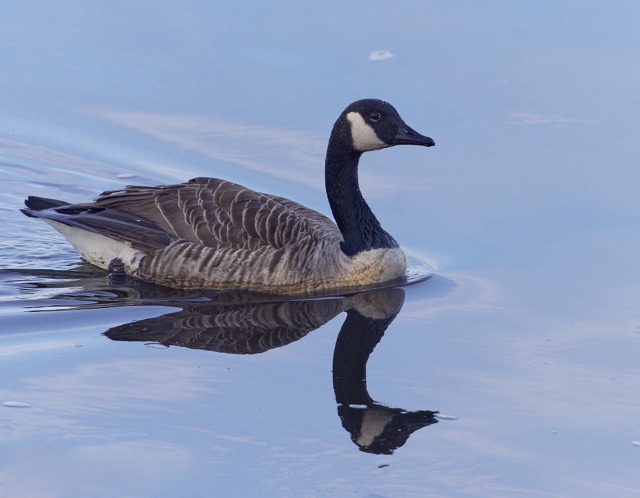

Canada Goose
Branta canadensis
Here all year.
Recorded by Jonathon Jongsma. CC BY-SA 3.0, via Wikimedia Commons, trimmed and volume evened out.
Look for
- A long black neck and a black head, with a white strap under the chin.
- A brown body. Some geese are pale on the chest, and some are much darker.
- In the air, flocks often fly in a big V.
A little about it
You can see Canada Geese here all year. Many that live in towns stay put, and others fly north in spring and south in fall. Listen for their loud honking.
Geese eat almost only plants. They nibble grass as they walk, and they eat grain from farm fields. They often feed in big flocks.
A pair may stay together for life. The female usually builds a nest on dry ground near water and lays 4 to 7 eggs. If you get too close, the male may lower his head and hiss at you!
The babies leave the nest 1 or 2 days after they hatch. Both parents watch over them, and they learn to fly at 7 to 9 weeks old.
Fun fact
Most geese nest on the ground. But some build nests up in trees, or even on top of a muskrat's house.
When it's here
- January: here
- February: here
- March: here
- April: here
- May: here
- June: here
- July: here
- August: here
- September: here
- October: here
- November: here
- December: here
Taller bars mean more sightings. Most often seen in March.
How big
30 to 46 inches. Much bigger than a Mallard.
Where to look
Lakes and ponds, even small ones in city parks and on golf courses. They also walk around in open fields near water to eat.
People have spotted it at Arcadia Lake, Oklahoma City Zoo area, Myriad Botanical Gardens.
Could it be something else?
Cackling Goose
It has the same black neck and white chin strap, but it's smaller. People used to count it as a small kind of Canada Goose.
Where these facts come from
- Audubon Guide to North American Birds
- When it's here: Sightings shared on iNaturalist in the 8 counties, all years.