All birds Ducks, Geese, and Waterfowl
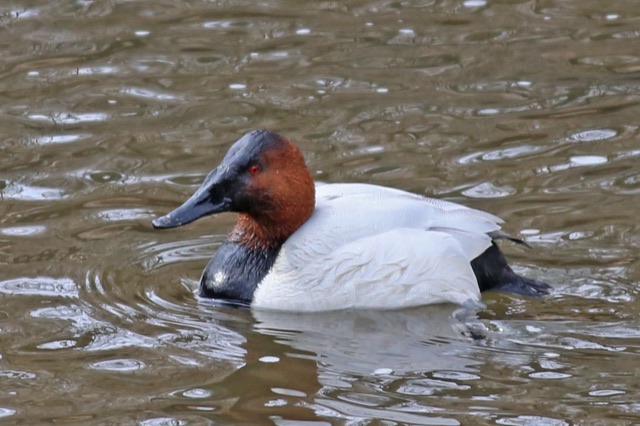
Canvasback
Aythya valisineria
Here November to February.
Look for
- A long, sloping forehead that runs right into a long black bill. From the side, it looks like a ski jump.
- Males have a chestnut-red head, red eyes, and a black chest. The back is white or very pale gray.
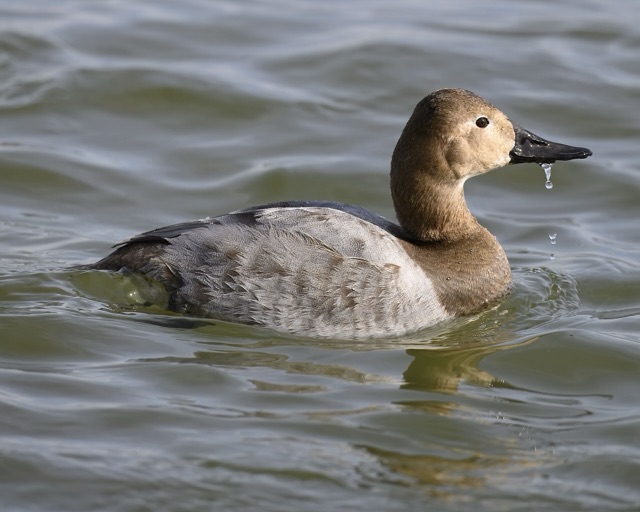
- Females have a pale tan head and neck, and a grayish brown body.
A little about it
Canvasbacks are winter ducks here. You can find them from November to February. They come late in fall and leave early in spring. When they migrate, flocks often fly high in a V shape.
A Canvasback dives for its food, most often in water a few feet deep. It can stay under for 10 to 20 seconds. It eats mostly water plants. Its favorite is wild celery, and its science name comes from that plant. It also eats snails and bugs.
This duck has a big body and small wings. To take off, it has to run across the top of the water. Once it's up, it flies fast. Long ago, settlers from Europe named it for the male's white back. They thought it looked like canvas cloth.
It nests in marshes, in thick plants like cattails over shallow water. The mom builds a big nest of dead plants, shaped like a basket, and lines it with soft down. Redhead moms often lay their eggs in Canvasback nests. A few hours after her babies hatch, the mom leads them to the water.
Fun fact
One Canvasback was clocked flying 72 miles per hour. Most other ducks fly about 40 miles per hour.
When it's here
- January: here
- February: here
- March: a few
- April: not here
- May: not here
- June: not here
- July: not here
- August: not here
- September: not here
- October: not here
- November: here
- December: here
Taller bars mean more sightings. Most often seen in February.
How big
19 to 23 inches. A bit bigger than a crow. It's the biggest diving duck in North America.
Where to look
Big lakes with lots of open water. Canvasbacks rest far out on the water, then gather in shallower spots to feed.
People have spotted it at Oklahoma City Zoo area, Lake Overholser, Lake Hefner.
Could it be something else?
Redhead
The male also has a red head, so look at the shape. A Redhead has a round head and a short bill with a pale band near the tip. A male Redhead's back is gray, and a male Canvasback's back is white.
More photos
Where these facts come from
- Oklahoma Department of Wildlife Conservation field guide: Canvasback Duck
- Audubon Guide to North American Birds
- When it's here: Sightings shared on iNaturalist in the 8 counties, all years.