All birds New World Sparrows
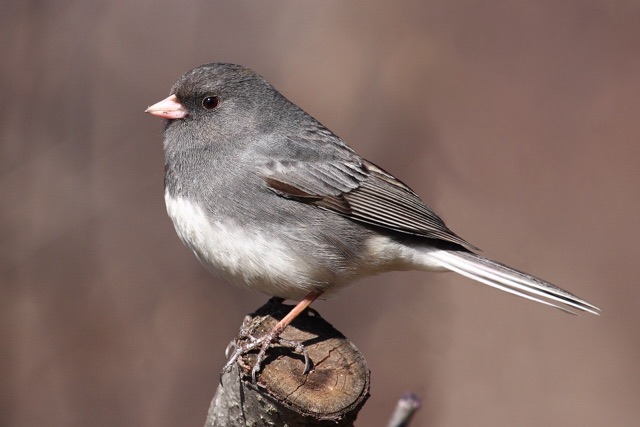

Dark-eyed Junco
Junco hyemalis
Here November to March.
Recorded by Kristen M. CC BY-NC, via iNaturalist, trimmed and volume evened out.
Look for
- Dark gray on the head, back, and chest, with a clean white belly.
- A small, pale pink bill.
- White feathers on the outer edges of the tail. They flash when the bird flies up.
A little about it
Juncos are winter birds here. A few show up in October, and most are here from November to March. February has the most. By April they're almost all gone. They spend the summer nesting in woods with evergreen trees.
In winter, they're one of the most common birds in Oklahoma. They travel in flocks of 3 to as many as 40.
Juncos eat small seeds, and millet is their favorite at feeders. They'd rather eat on the ground than up on a feeder. They hop and run along, and sometimes scratch in dead leaves or snow.
When a flock flies up into the bushes, listen for sharp ticking calls. Flock birds use these calls to keep in touch.
Fun fact
Juncos come in several color types. Some look so different that scientists once thought they were different kinds of birds.
When it's here
- January: here
- February: here
- March: here
- April: a few
- May: not here
- June: a few
- July: a few
- August: not here
- September: not here
- October: a few
- November: here
- December: here
Taller bars mean more sightings. Most often seen in February.
How big
About 6 inches. It's a kind of sparrow, and about the same size.
Where to look
On the ground under feeders and bushes, in yards and along the edges of woods. Juncos like spots with trees or brush close by.
People have spotted it at Lake Thunderbird State Park, Mitch Park, Martin Park Nature Center.
Could it be something else?
Female Dark-eyed Junco
Females are a little browner than males. They have the same pink bill and white tail edges.
"Oregon" Dark-eyed Junco
This western type has a black hood, a brown back, and rusty or pinkish sides. Some juncos in Oklahoma show these colors. Check for the pale bill and white tail edges.
Where these facts come from
- Oklahoma Department of Wildlife Conservation field guide
- Audubon Guide to North American Birds
- When it's here: Sightings shared on iNaturalist in the 8 counties, all years.