All birds Tyrant Flycatchers
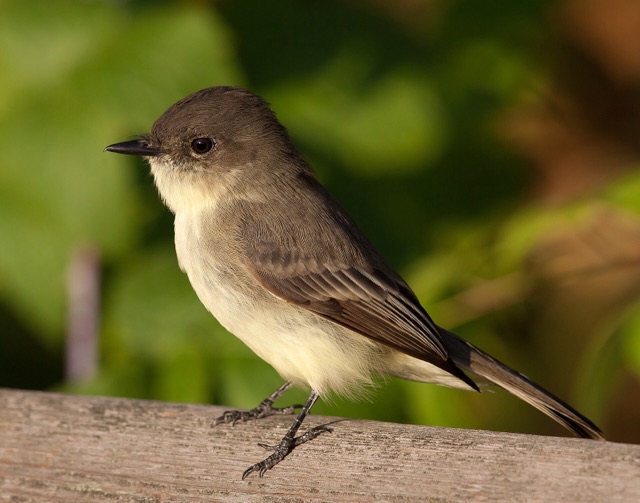

Eastern Phoebe
Sayornis phoebe
Here all year.
Recorded by Christopher McPherson. CC BY-NC-SA 4.0, via xeno-canto, trimmed and volume evened out.
Look for
- Gray-brown on top, with a darker, sooty head.
- A whitish throat and chest with no streaks or spots. In fall, the belly has a little yellow.
- It wags its tail while it sits on a perch.
A little about it
Phoebes are flycatchers. A phoebe sits on a perch and watches. When a bug flies by, it zips out and grabs it in the air. It also eats spiders, and in the cold months it eats berries.
It says its own name. The song is a clear "fee-bee," over and over.
Phoebes are some of the earliest birds to come back in spring, and some of the last to leave in fall. Around here you can see them all year, but there are far fewer from November to February.
Long ago, phoebes probably nested on rocky spots along streams. Now many nest under bridges, in barns, and under porch roofs. The nest is a cup made of mud and moss.
Fun fact
A phoebe may use the same nest spot year after year. Sometimes it builds its new nest right on top of the old one.
When it's here
- January: here
- February: here
- March: here
- April: here
- May: here
- June: here
- July: here
- August: here
- September: here
- October: here
- November: here
- December: here
Taller bars mean more sightings. Most often seen in June.
How big
5½ to 7 inches. About as big as a sparrow, but slimmer, with a longer tail.
Where to look
Near water and along the edges of woods, and around farms, barns, and bridges. Look for one sitting low on a branch or fence, wagging its tail.
People have spotted it at Martin Park Nature Center, Arcadia Lake, Stinchcomb Wildlife Refuge.
Could it be something else?
Eastern Wood-Pewee
Also plain and gray-brown, but it has faint pale stripes on its wings and very long wingtips. It's only here in summer.
Eastern Kingbird
Bigger, with a black head and back, a bright white chest, and a white band across the end of its tail. It's only here in summer.
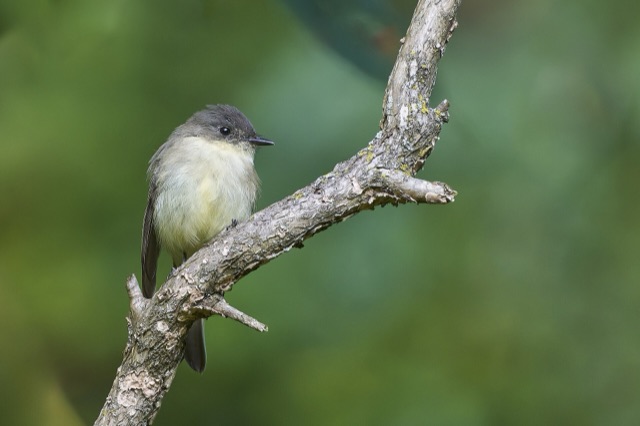
More photos
Where these facts come from
- Audubon Guide to North American Birds
- When it's here: Sightings shared on iNaturalist in the 8 counties, all years.