All birds Starlings
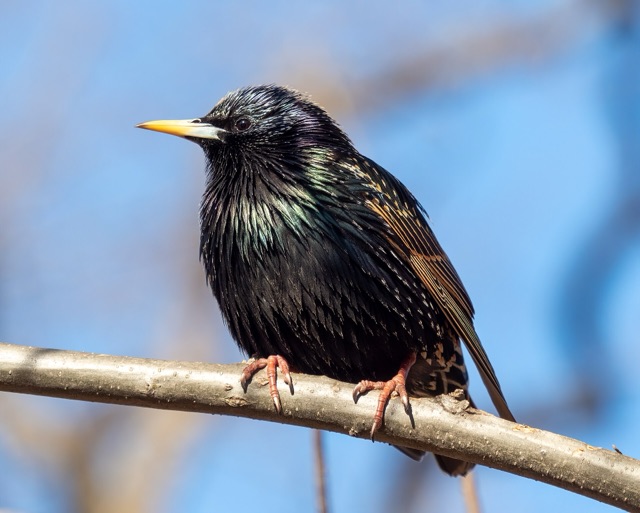

European Starling
Sturnus vulgaris
Here all year.
Recorded by Laurel Ladwig. CC BY-NC-SA, via iNaturalist, trimmed and volume evened out.
Look for
- In spring and summer, it's black with a purple and green shine.
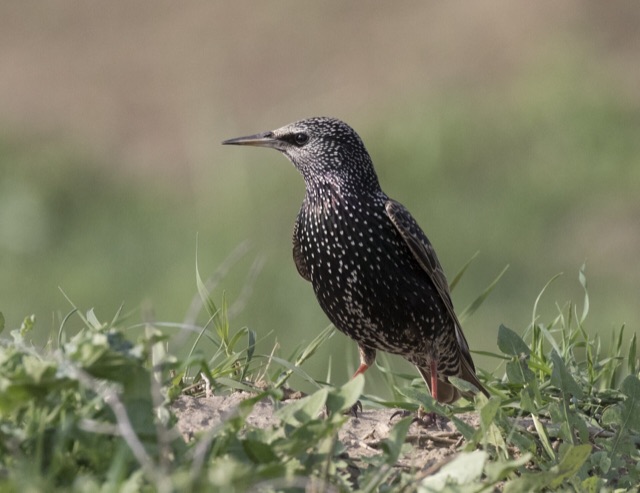
- In fall, it's covered in white spots. The spots slowly wear off over the winter.
- A short tail and a thin, straight bill. The bill turns bright yellow in spring.
A little about it
People brought starlings to North America in 1890. The "European" in the name tells you where they came from. Since then, they've spread over most of North America, and you can see them here all year.
When they can find bugs, that's mostly what starlings eat. In fall and winter they eat lots of berries and seeds. Sometimes they catch bugs in the air or sip nectar from flowers.
In fall and winter, starlings gather in huge flocks. In spring, the males sing a wheezy, squeaky song. They mix in perfect copies of other birds' songs.
Starlings nest in holes, like old woodpecker holes or birdhouses. The male starts the nest, and the female finishes it. She may even toss out some of his stuff! Because they need holes, starlings sometimes take nest spots that bluebirds and Red-headed Woodpeckers need too.
Fun fact
In spring, look closely at a starling's yellow bill. Near the face, the bottom half of the bill is blue on a male and pink on a female.
When it's here
- January: here
- February: here
- March: here
- April: here
- May: here
- June: here
- July: here
- August: here
- September: here
- October: here
- November: here
- December: here
Taller bars mean more sightings. Most often seen in April.
How big
8 to 9 inches. A bit smaller than a robin, with a short tail.
Where to look
Towns and farms, anywhere with open ground. Look for a flock on a lawn, poking the dirt with their bills.
People have spotted it at Mitch Park, Myriad Botanical Gardens, Lake Overholser.
Could it be something else?
Young European Starling
Young starlings look very different from their parents. They're plain dusty gray all over, with dark bills. You'll see them in flocks in summer.
More photos
Where these facts come from
- Audubon Guide to North American Birds
- When it's here: Sightings shared on iNaturalist in the 8 counties, all years.