All birds Ducks, Geese, and Waterfowl
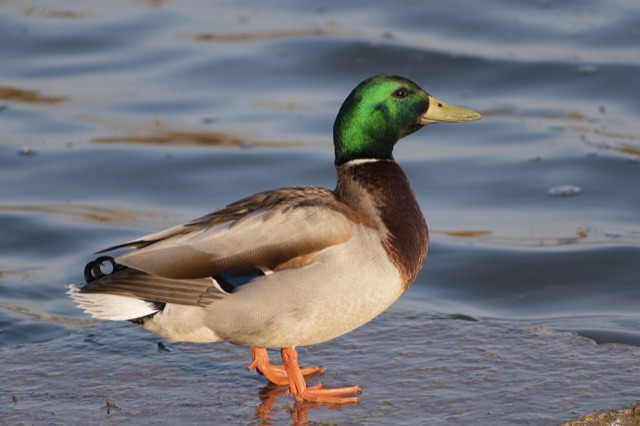

Mallard
Anas platyrhynchos
Here all year.
Recorded by Jonathon Jongsma. CC BY-SA 3.0, via Wikimedia Commons, trimmed and volume evened out.
Look for
- Males have a shiny green head and a yellow bill, with a thin white ring around the neck.
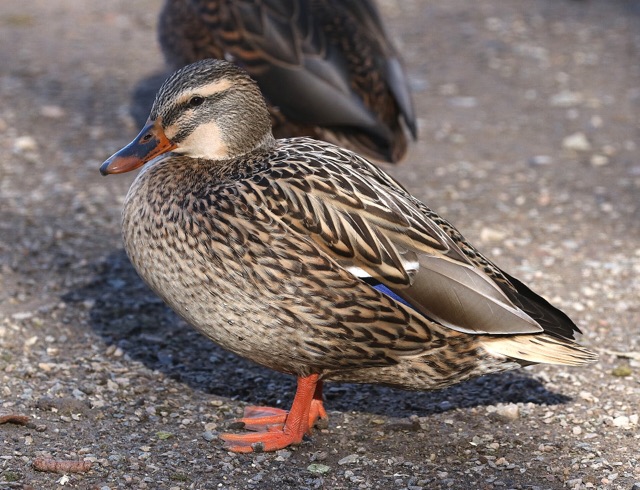
- Females are speckled brown all over. Their orange bill has black smudges on it.
- Males and females both have a blue patch on each wing, lined with white.
A little about it
You can see Mallards here all year. Oklahoma is also a winter home for Mallards from farther north. They're fast fliers and can go up to 55 miles per hour.
To eat, a Mallard tips forward with its tail sticking up. That way it can reach plants under the water. It almost never dives.
Most of what Mallards eat is plants, like seeds and leftover grain in fields. They also eat bugs, worms, tadpoles, and small fish. Ducklings eat lots of water bugs.
The mother usually hides her nest on the ground, tucked in among plants. She lays about 9 eggs. The fuzzy ducklings can leave the nest just 13 to 16 hours after they hatch.
Fun fact
Only the female Mallard makes the loud "quack" you know. The male makes soft, quiet calls.
When it's here
- January: here
- February: here
- March: here
- April: here
- May: here
- June: here
- July: here
- August: here
- September: here
- October: here
- November: here
- December: here
Taller bars mean more sightings. Most often seen in October.
How big
20 to 26 inches. A bit bigger than a crow.
Where to look
Almost any pond or lake, even a small one in a city park. They also feed in grain fields and in ditches by the road.
People have spotted it at Myriad Botanical Gardens, Lake Overholser, Mitch Park.
Could it be something else?
Farm ducks
Most farm ducks came from Mallards long ago. A farm duck can be chunky and clumsy. A wild Mallard is sleek and fast in the air.
More photos
Where these facts come from
- Oklahoma Department of Wildlife Conservation field guide
- Audubon Guide to North American Birds
- When it's here: Sightings shared on iNaturalist in the 8 counties, all years.