All birds Cardinals and Allies
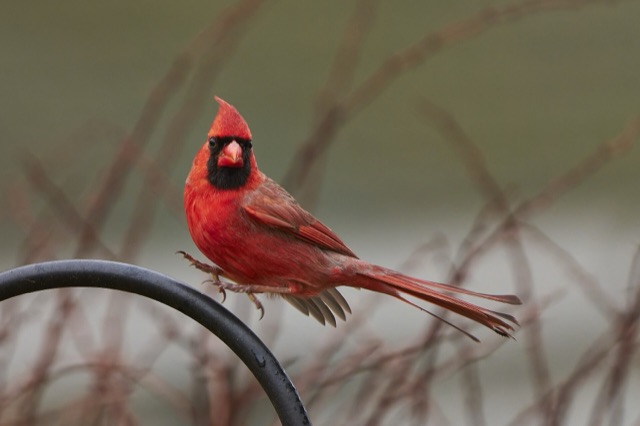

Northern Cardinal
Cardinalis cardinalis
Here all year.
Recorded by Jonathon Jongsma. CC BY-SA 4.0, via Wikimedia Commons, trimmed and volume evened out.
Look for
- Males are bright red all over, with a pointed crest on the head.
- A black mask around a thick, orange-red bill.
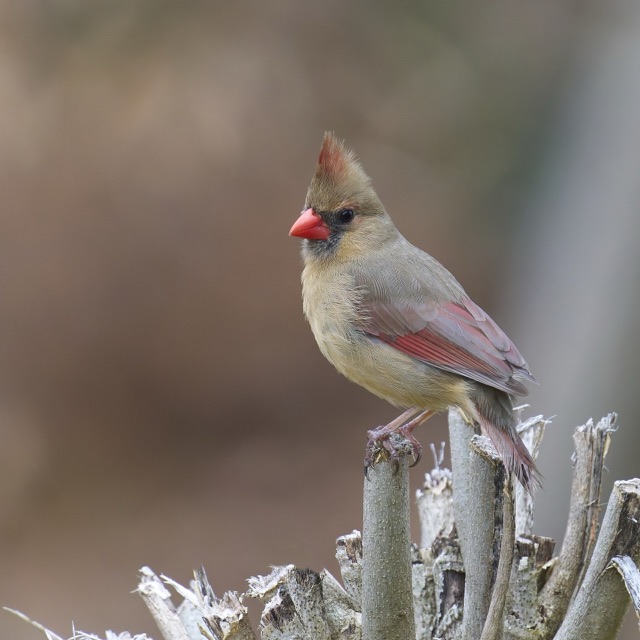
- Females are warm brown with red on the wings, tail, and crest. They have the same thick, orange-red bill.
A little about it
Cardinals live here all year. You can see one in the snow in January and in the heat of July.
They love bird feeders, especially black-oil sunflower seeds. They like to eat on the ground or close to it, near bushes where they can hide fast. Away from feeders, they eat seeds, berries, and bugs.
In winter, cardinals often travel in small flocks. On snowy days a flock can grow to 40 birds.
Listen for a loud, whistled song that sounds like "cheer, cheer, cheer" or "purty, purty, purty." Females sing too, mostly in spring.
Fun fact
In spring, a male cardinal may fight his own reflection in a window. He thinks it's another male in his space.
When it's here
- January: here
- February: here
- March: here
- April: here
- May: here
- June: here
- July: here
- August: here
- September: here
- October: here
- November: here
- December: here
Taller bars mean more sightings. Most often seen in January.
How big
About 9 inches. A bit smaller than a robin.
Where to look
Yards, parks, and the edges of woods, anywhere with thick bushes to hide in. Cardinals come to feeders all year.
People have spotted it at Mitch Park, Lake Thunderbird State Park, Oklahoma City Zoo area.
Could it be something else?
Summer Tanager
Also all red, but it has no crest and no black mask, and its bill is pale. It's only here in summer.
More photos
Where these facts come from
- Oklahoma Department of Wildlife Conservation field guide
- Audubon Guide to North American Birds
- When it's here: Sightings shared on iNaturalist in the 8 counties, all years.