All birds Waxwings
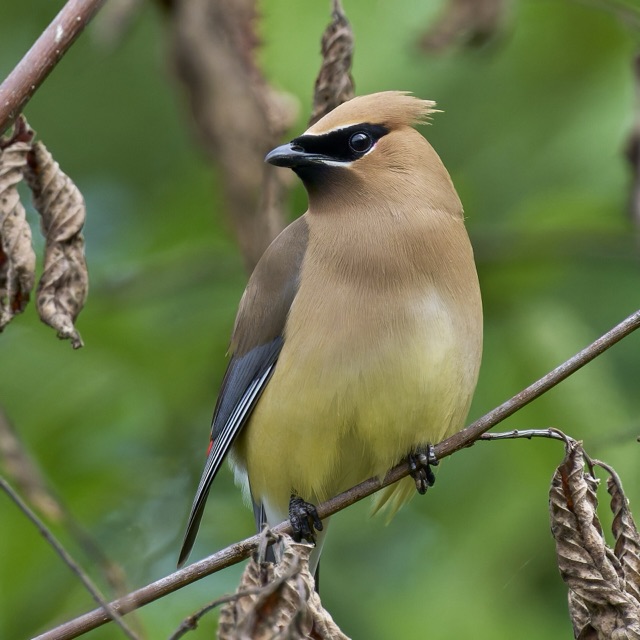

Cedar Waxwing
Bombycilla cedrorum
Here November to May.
Recorded by Jeffrey Mann. CC BY-NC-SA 4.0, via xeno-canto, trimmed and volume evened out.
Look for
- Soft-looking, warm brown feathers and a crest on the head. The belly is pale yellow.
- A thin black mask across the eyes. Males and females look alike.
- A gray tail with a bright yellow tip. Some have tiny red spots on the tips of their wing feathers.
A little about it
Cedar Waxwings are winter birds here. Flocks show up in November and stay until about May. February has the most. From July to October, you won't see them.
Waxwings eat mostly berries and small fruit. A flock lands on a tree full of berries and flutters through the branches to eat. Some favorites are juniper berries, dogwood berries, and wild cherries. In summer, they catch bugs in the air too.
These birds love company. A flock of 30 to 120 birds is common, and some flocks have more than 300! It's rare to see just 1 waxwing. Flocks wander to wherever the berries are, so the places they show up can change from year to year.
When a male and female pair up, they sit close and touch bills. They pass bits of food back and forth.
Fun fact
Sometimes a row of waxwings on a branch passes a berry from bill to bill. It goes down the line until one bird finally swallows it.
When it's here
- January: here
- February: here
- March: here
- April: here
- May: here
- June: a few
- July: not here
- August: not here
- September: not here
- October: not here
- November: here
- December: here
Taller bars mean more sightings. Most often seen in February.
How big
About 6 inches. A little bigger than a sparrow.
Where to look
Trees and bushes full of berries, in town or at the edges of woods. Listen for thin, high whistles from a flock up in the treetops.
People have spotted it at Stinchcomb Wildlife Refuge, Arcadia Lake, Oklahoma City Zoo area.
Could it be something else?
Female Northern Cardinal
She also has a crest and brownish feathers. Look at the bill and tail. She has a thick orange-red bill and a reddish tail. A waxwing's tail is gray with a yellow tip.
Where these facts come from
- Oklahoma Department of Wildlife Conservation field guide
- Audubon Guide to North American Birds
- When it's here: Sightings shared on iNaturalist in the 8 counties, all years.