All birds Loons
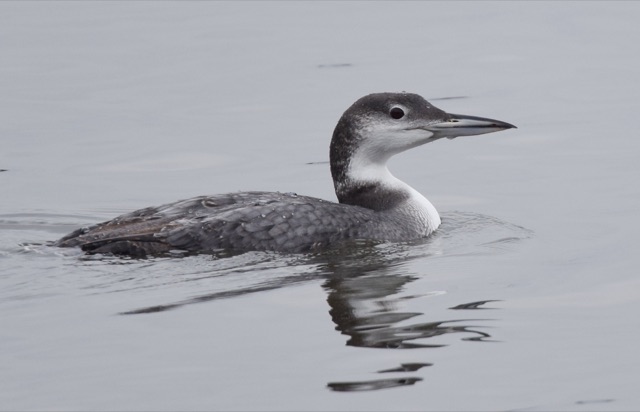
Common Loon
Gavia immer
Here November to April.
Recorded by mannac. CC BY-NC, via iNaturalist, trimmed and volume evened out.
Look for
- A big, long bird that swims low in the water. It dives and can stay under for minutes at a time.
- A thick, pointed bill, shaped like a dagger.
- In winter it's plain. Look for pale feathers around the eye and a pale collar on the neck.
A little about it
Common Loons spend the winter here. Look for them from November to April. In winter they're quiet, and their colors are plain.
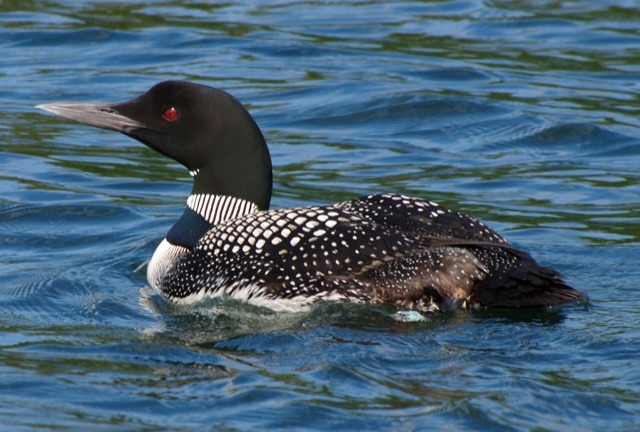
Up north in summer, a loon looks very different. It has a black head and a back checkered black and white. Lots of people know loons by this bold look, and by their loud, wild laughing call.
A loon swims underwater by kicking its big webbed feet. It can dive up to 20 feet down to catch a fish. It eats mostly small fish, plus frogs and water bugs.
Its legs sit far back on its body, so it's clumsy on land. Loons only come ashore to nest. The chicks can swim and dive when they're 2 or 3 days old, and small chicks sometimes ride on a parent's back.
Fun fact
A loon pair may spend the winter hundreds of miles apart. In spring, they both fly back to the same lake to nest.
When it's here
- January: here
- February: here
- March: here
- April: here
- May: a few
- June: a few
- July: a few
- August: not here
- September: not here
- October: not here
- November: here
- December: here
Taller bars mean more sightings. Most often seen in December.
How big
26 to 36 inches, with wings 4 to 5 feet across. Close to the size of a goose.
Where to look
Big lakes that don't freeze over. Look far out on open water, where it often swims and feeds alone.
People have spotted it at Lake Hefner, Lake Thunderbird State Park.
Could it be something else?
Double-crested Cormorant
People mix them up on the water. A cormorant is dark all over, with orange skin on its face and throat and a thin, hooked bill. It swims with its bill tipped up, and it often perches with its wings held open to dry.
More photos
Where these facts come from
- Oklahoma Department of Wildlife Conservation field guide
- Audubon Guide to North American Birds
- When it's here: Sightings shared on iNaturalist in the 8 counties, all years.