All birds Owls
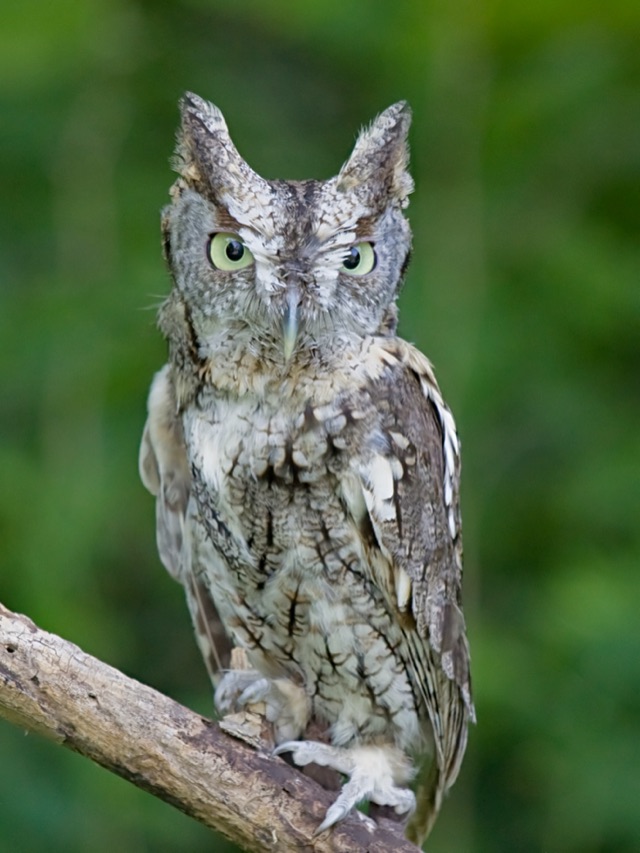

Eastern Screech-Owl
Megascops asio
Here all year.
Recorded by Tim Spahr. CC BY-NC-SA 4.0, via xeno-canto, trimmed and volume evened out.
Look for
- A small owl with short ear tufts. It can raise them up or lay them flat, so its head shape changes.
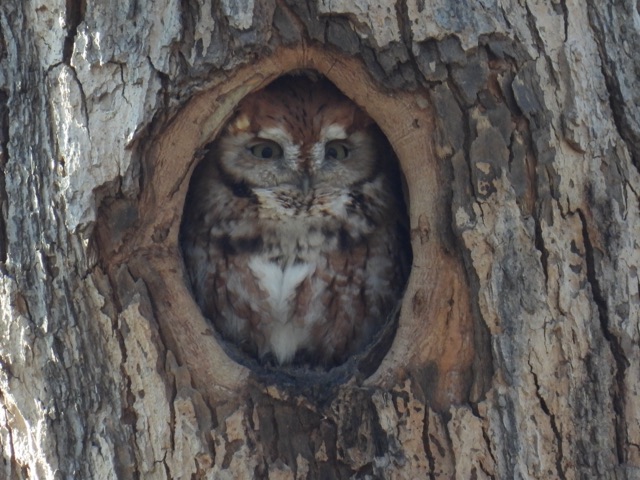
- Most are gray. Some are reddish or brown instead.
- A small bill that's a grayish green color.
A little about it
Screech-owls live here all year and don't migrate. Lots of people have one living close by and never know it. It sleeps all day and wakes up at dusk.
It hunts at night, mostly in the first 4 hours after dark. It swoops down and grabs food with its sharp claws. It eats big bugs like moths and beetles, plus mice. It can find food by sound as well as by sight. Small prey gets swallowed whole.
When it feels scared, it stretches up tall and pulls its feathers in tight. That makes it look like a branch. For a bird named screech-owl, its calls are soft. Listen for whinnies and gentle trills. The male's trill lasts 2 or 3 seconds and has about 35 notes.
It nests in a hole in a tree, like an old woodpecker hole. It will use a nest box too. The female lays white eggs, often 4 or 5, and the male brings her food while she sits on them. The young leave the nest about 4 weeks after they hatch.
Fun fact
Screech-owl parents sometimes bring a live blind snake to the nest. The tiny snake looks like a worm. It lives in the mess at the bottom of the nest and eats bugs there, which may help keep the baby owls free of pests.
When it's here
- January: here
- February: here
- March: here
- April: here
- May: here
- June: here
- July: here
- August: here
- September: here
- October: here
- November: here
- December: here
Taller bars mean more sightings. Most often seen in June.
How big
9 to 10 inches. About as big as a robin.
Where to look
Woods and shady yards with big old trees. In the daytime it hides in a tree hole or thick leaves, so listen for it after dark.
Could it be something else?
Great Horned Owl
It has ear tufts too, but it's much bigger, 18 to 24 inches long. It's brown and gray, with a white patch on its throat.
More photos
Where these facts come from
- Oklahoma Department of Wildlife Conservation field guide
- Audubon Guide to North American Birds
- When it's here: Sightings shared on iNaturalist in the 8 counties, all years.