All birds Herons, Egrets, and Bitterns
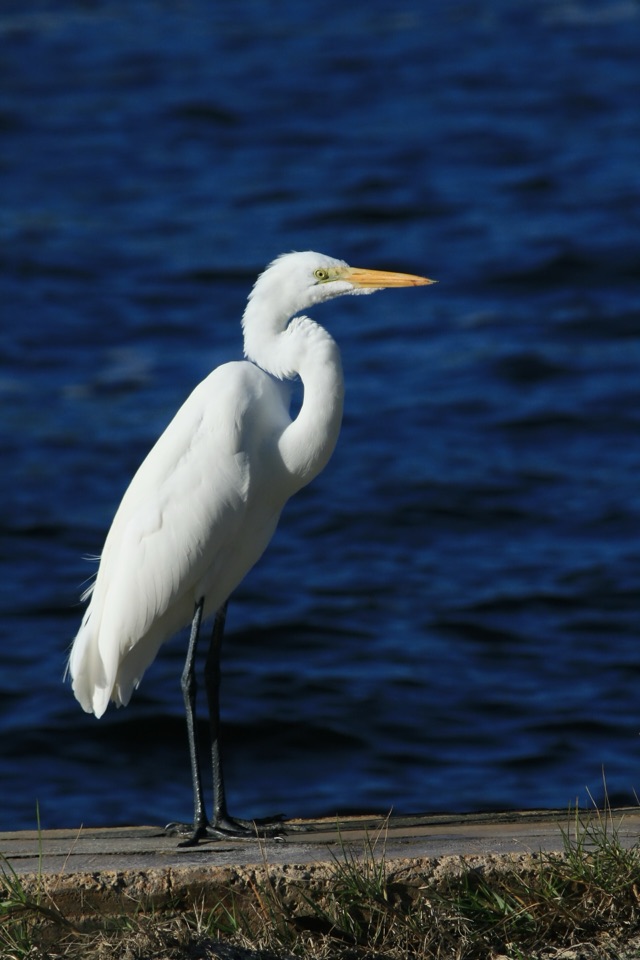

Great Egret
Ardea alba
Here April to October.
Recorded by Bill Grantham. CC BY-NC, via iNaturalist, trimmed and volume evened out.
Look for
- A tall bird that's white all over, with a long neck.
- A long yellow bill.
- Long black legs. It walks slowly through shallow water on them.
A little about it
Great Egrets are summer birds here. Look for them from April to October. There are the most from July to September.
It eats mostly fish. It stands or walks slowly in shallow water and waits. When a fish swims near, it grabs it with a fast jab of its bill.
It also eats frogs and snakes. In open fields it catches grasshoppers. Sometimes it even steals food from smaller birds!
Great Egrets nest in groups, often with other water birds. Both parents build a nest of sticks in a tree, usually 10 to 40 feet up. The chicks can fly when they're 6 or 7 weeks old.
Fun fact
In the late 1800s, people almost wiped out Great Egrets to get their long feathers for fashion. Bird lovers worked to protect them, and the egrets came back. Now the Great Egret is the symbol of the National Audubon Society.
When it's here
- January: a few
- February: a few
- March: a few
- April: here
- May: here
- June: here
- July: here
- August: here
- September: here
- October: here
- November: a few
- December: a few
Taller bars mean more sightings. Most often seen in September.
How big
35 to 41 inches, with wings about 4 and a half feet across. A little smaller than a Great Blue Heron.
Where to look
The shallow edges of lakes and marshes. Sometimes it hunts in open fields, even around cattle.
People have spotted it at Lake Overholser, Stinchcomb Wildlife Refuge, Arcadia Lake.
Could it be something else?
Cattle Egret
Also white, but much smaller, with a shorter bill and shorter legs.
Great Blue Heron
It hunts the same way, standing still in the water. But it's bigger and gray-blue, with a black stripe on its white head.
Where these facts come from
- Audubon Guide to North American Birds
- When it's here: Sightings shared on iNaturalist in the 8 counties, all years.