All birds Ducks, Geese, and Waterfowl
Lesser Scaup
Aythya affinis
Here November to March.
Look for
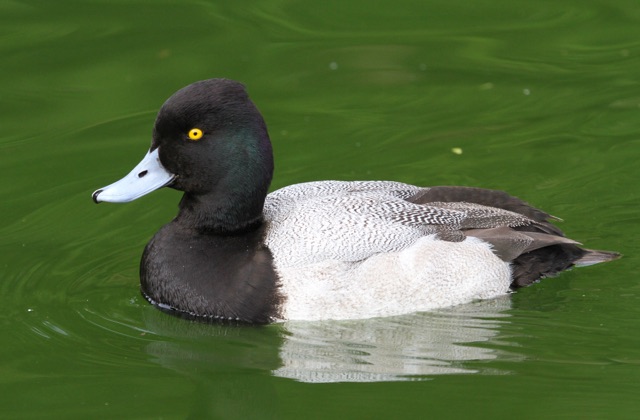
- Males are black at the front and back, and pale in the middle.
- In good light, the male's black head can shine purple. The top of the head has a little peak toward the back.
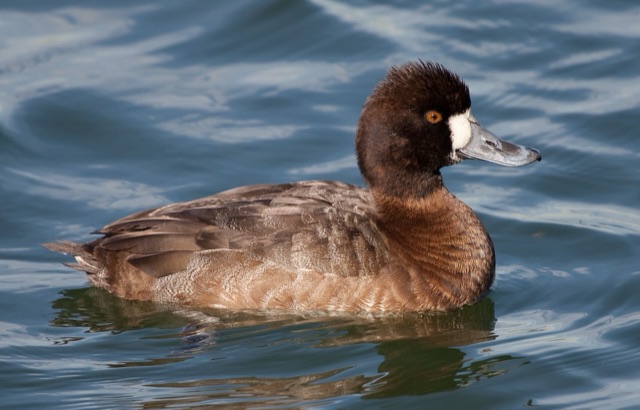
- Females have a brown head with a white patch on the face, near the bill.
A little about it
Lesser Scaup are winter ducks here. You can find them from November to March. They travel in flocks, and they come late in fall and leave early in spring.
A scaup is a diving duck. It swims down to find clams, snails, and water bugs. It also eats water plants and seeds. Sometimes scaup even feed at night.
In winter they gather in tight flocks. A flock can have hundreds or even thousands of ducks. Often there's no other kind of duck mixed in.
In summer they nest near big marshes. The nest is a small dip on dry ground near the water, often on an island. It has some dry grass and a lining of soft down feathers. The mother lays 9 to 11 eggs. Soon after they hatch, the babies go to the water and find their own food.
Fun fact
Scaup moms sometimes team up. The babies from 2 or more families may join into 1 big group, with a few moms watching over them all.
When it's here
- January: here
- February: here
- March: here
- April: a few
- May: not here
- June: not here
- July: a few
- August: not here
- September: not here
- October: not here
- November: here
- December: here
Taller bars mean more sightings. Most often seen in November.
How big
16 to 18 inches. About as big as a crow.
Where to look
Lakes and ponds in winter. Look for a big flock out on the water, with ducks diving and popping back up.
People have spotted it at Oklahoma City Zoo area, Lake Overholser, Lake Hefner.
Could it be something else?
Greater Scaup
Looks almost the same. Its head is rounder, with the high point near the front, and its bill is a bit bigger. A male's head often shines green.
Ring-necked Duck
The male has a black back, and a white bar in front of his gray sides. Look for white rings on his bill. A male scaup is pale all through the middle.
More photos
Where these facts come from
- Audubon Guide to North American Birds
- When it's here: Sightings shared on iNaturalist in the 8 counties, all years.