All birds Ducks, Geese, and Waterfowl

Ring-necked Duck
Aythya collaris
Here November to March.
Look for
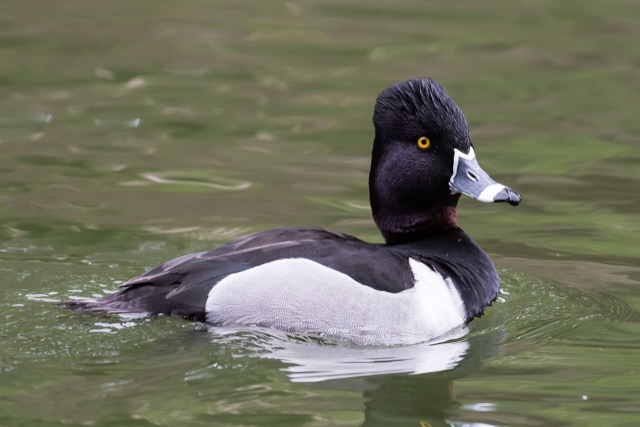
- Males have a black head, chest, and back, with gray sides. A white bar sits in front of the gray.
- White rings on the bill. They're easiest to see on the male.
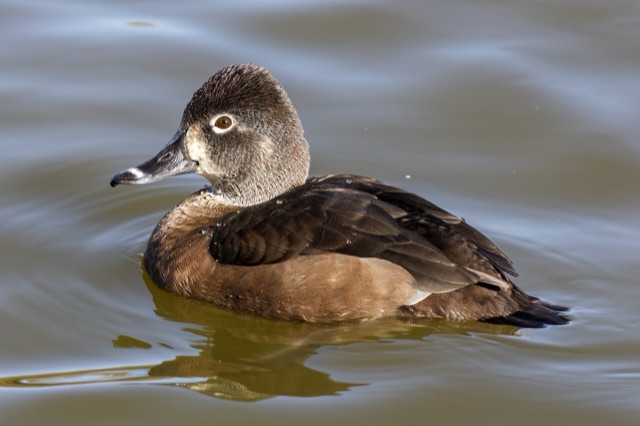
- Females are gray-brown, with a pale patch by the bill. The head comes to a peak on top.
A little about it
Ring-necked Ducks are winter ducks here. You can find them from November to March. They fly here and back in flocks.
A ring-neck is a diving duck. It most often feeds in water just a few feet deep, but it can dive down 40 feet. Plants make up about 80 percent of what it eats, like seeds and roots. It also eats water bugs, snails, and worms.
Most diving ducks have to run across the water to take off. A ring-neck can spring right up into the air from the water. It's a strong, fast flier.
In summer they go north to nest, many of them in Canada. The nest is a bowl of grass on a dry clump or a mat of floating plants. A mom usually lays 8 to 10 eggs and sits on them for about 27 days. She may stay with her babies until they can fly. Most duck moms don't stay that long.
Fun fact
This duck does have a brown ring on its neck, but it's very hard to see. The white rings on its bill are much easier to spot, so hunters call it the "ringbill."
When it's here
- January: here
- February: here
- March: here
- April: a few
- May: a few
- June: not here
- July: a few
- August: not here
- September: not here
- October: not here
- November: here
- December: here
Taller bars mean more sightings. Most often seen in February.
How big
15 to 18 inches. About as big as a crow.
Where to look
Ponds and lakes in winter, and slow rivers too. Ring-necks even like small ponds with trees all around them.
People have spotted it at Oklahoma City Zoo area, Lake Overholser, Lake Hefner.
Could it be something else?
Lesser Scaup
A male scaup is black at the front and back too. But he's pale all through the middle. A male ring-neck has a black back and a white bar on his side.
Redhead
A female Redhead looks a lot like a female ring-neck. The Redhead is browner, with a round head and a plainer face.
More photos
Where these facts come from
- Oklahoma Department of Wildlife Conservation field guide
- Audubon Guide to North American Birds
- When it's here: Sightings shared on iNaturalist in the 8 counties, all years.