All birds Herons, Egrets, and Bitterns
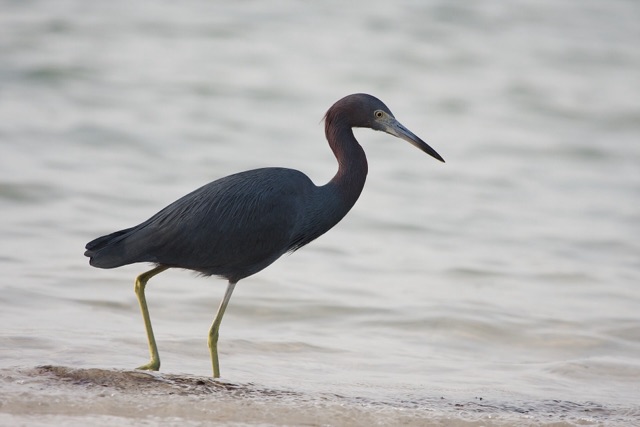

Little Blue Heron
Egretta caerulea
Here April to September.
Recorded by Paul Driver. CC BY-NC-SA 4.0, via xeno-canto, trimmed and volume evened out.
Look for
- Grown-ups are dark blue-gray all over. The head and neck look a little purple.
- A blue bill with a black tip.
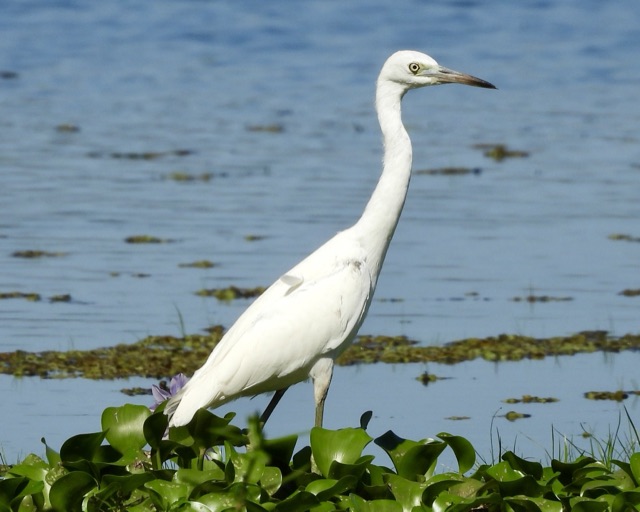
- Young ones are white all over at first, with dull green legs.
A little about it
Little Blue Herons spend the summer here. Look for them from April to September. In fall they head south, and some fly all the way to South America.
This heron is a slow, careful hunter. It walks very slowly through shallow water, or it stands still and waits for food to come close. It eats mostly small fish and crayfish, and in fields it catches lots of grasshoppers.
Little Blue Herons nest in groups. Both parents build a nest of sticks in a tree or bush, usually 3 to 15 feet up. When the chicks are 2 or 3 weeks old, they start climbing out onto the branches nearby.
In the late 1800s, hunters killed huge numbers of white egrets for their long, fancy feathers. Little Blue Herons have dark feathers and no long plumes, so the hunters mostly left them alone.
Fun fact
Young Little Blue Herons start out white. As their blue feathers grow in, they look patchy blue and white for a while. People call this the "calico" look, like a calico cat.
When it's here
- January: not here
- February: not here
- March: not here
- April: here
- May: here
- June: here
- July: here
- August: here
- September: here
- October: a few
- November: not here
- December: not here
Taller bars mean more sightings. Most often seen in August.
How big
22 to 29 inches, with wings a little over 3 feet across. Bigger than a crow, but much smaller than a Great Blue Heron.
Where to look
Marshes and the shallow edges of ponds and lakes. Sometimes it hunts in wet meadows and grassy fields too.
People have spotted it at Arcadia Lake, Lake Overholser, Lake Hefner.
Could it be something else?
Snowy Egret
A young Little Blue Heron is white too. A grown-up Snowy Egret has bright yellow feet and yellow skin in front of each eye. A young Little Blue usually has gray skin there and dull green legs, and it hunts more slowly.
Great Blue Heron
Also gray-blue, but much bigger, with a huge bill. Its head is whitish, with a black stripe above each eye.
More photos
Where these facts come from
- Audubon Guide to North American Birds
- When it's here: Sightings shared on iNaturalist in the 8 counties, all years.