All birds Grebes
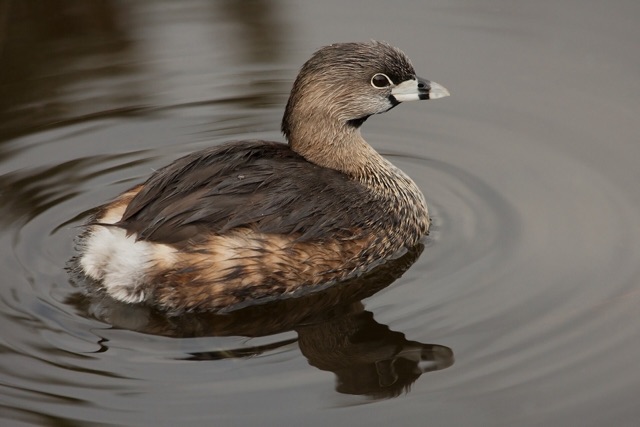

Pied-billed Grebe
Podilymbus podiceps
Here September to April.
Recorded by Paul Marvin. CC BY-NC-SA 4.0, via xeno-canto, trimmed and volume evened out.
Look for
- A small swimmer with a short neck and a thick bill.
- In winter, the bill is plain and pale. When it's time to nest, the bill turns white with a black ring around it.
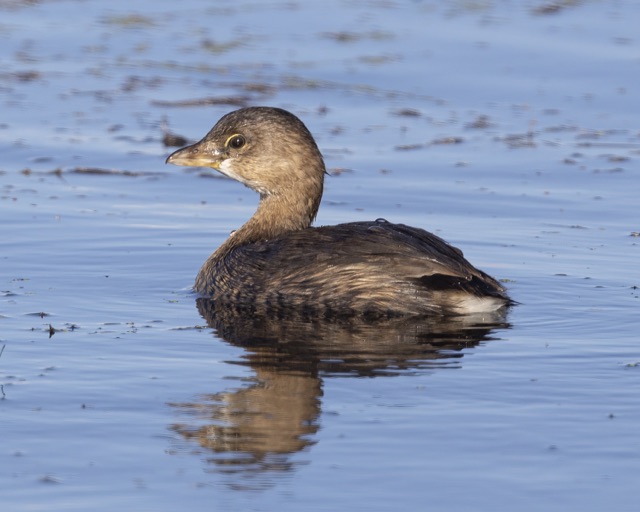
- Its feathers are brown, with a rusty look in winter. Males and females look alike.
A little about it
Grebes are winter birds here. You can find them from September to April, and November has the most. In summer they're hard to find.
A grebe dives from the top of the water to hunt. It kicks with its feet to swim. It eats water bugs, small fish, leeches, frogs, and tadpoles.
Grebes like to be alone. They're almost never in a flock. If one gets scared, it can sink slowly until only its head is above the water. You'll hardly ever see one fly.
The nest is a pile of wet plants that floats on the water. Mom and dad build it together. She lays 4 to 7 eggs. The babies can swim soon after they hatch. They often ride on a parent's back, and the parent may even swim underwater with them on board!
Fun fact
Grebes swallow lots of feathers. The parents even feed feathers to their babies.
When it's here
- January: here
- February: here
- March: here
- April: here
- May: a few
- June: not here
- July: not here
- August: not here
- September: here
- October: here
- November: here
- December: here
Taller bars mean more sightings. Most often seen in November.
How big
12 to 15 inches. Bigger than a robin, but smaller than a crow.
Where to look
Ponds and lakes, most of all marshy ponds with lots of plants in the water. Look for one swimming by itself.
People have spotted it at Lake Hefner, Lake Stanley Draper, Lake Overholser.
Could it be something else?
American Coot
Another small, dark swimmer with a thick, pale bill. A coot is dark gray with a white bill, and it likes to be in a flock. A grebe is brown and is most often alone.
Bufflehead
The female Bufflehead is a small diver too. She has a white spot on each side of her gray head. A grebe has no white spot.
More photos
Where these facts come from
- Audubon Guide to North American Birds
- When it's here: Sightings shared on iNaturalist in the 8 counties, all years.