All birds Herons, Egrets, and Bitterns
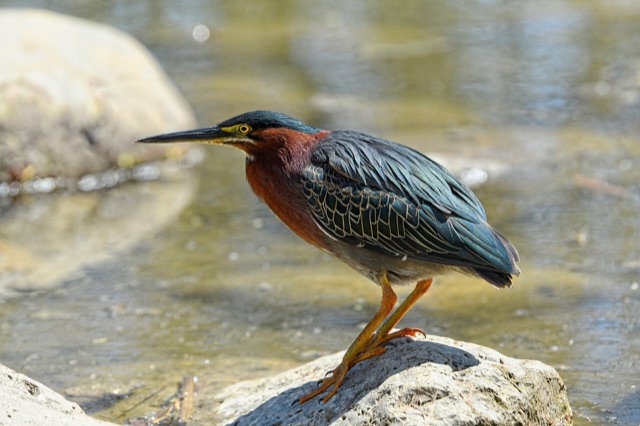

Green Heron
Butorides virescens
Here May to September.
Recorded by Andrew Spencer. CC BY-NC-ND 2.5, via xeno-canto.
Look for
- A small, dark heron. Its back can shine green or blue, but often it just looks dark.
- A reddish-brown neck and a black cap. It may puff the cap feathers up into a bushy crest.
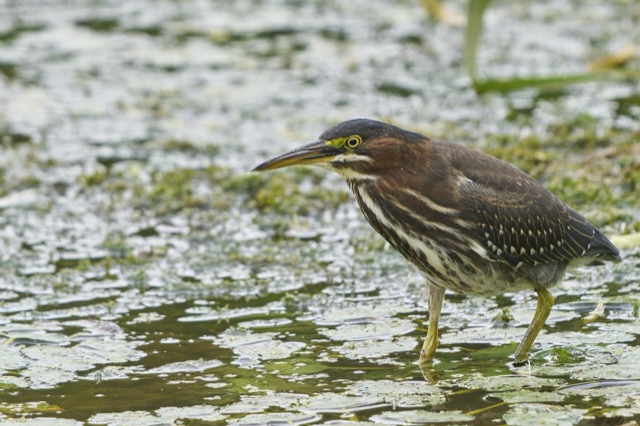
- Orange-yellow legs. Young birds are browner, with stripes down the neck.
A little about it
Green Herons spend the summer here. Look for them from May to September, with the most in August. In winter, most of them fly south, and some go as far as South America.
It hunts at the edge of shallow water. It stands still, or creeps along very slowly, and waits for food to come close. It eats mostly small fish, like minnows, plus crayfish, frogs, tadpoles, and water bugs.
This heron likes to be alone most of the year. When it's nervous, it flicks its tail and raises and lowers its crest. If you scare one, it may fly off up the creek, calling "kyow!"
The nest is a flat pile of sticks in a bush or tree, often 5 to 30 feet up. The mother lays 3 to 5 pale green or blue-green eggs, and both parents keep them warm. The young can fly when they're about 3 weeks old.
Fun fact
A Green Heron may go fishing with bait. It drops a feather or a small twig on the water. When a fish swims close to it, the heron strikes.
When it's here
- January: not here
- February: not here
- March: not here
- April: a few
- May: here
- June: here
- July: here
- August: here
- September: here
- October: a few
- November: a few
- December: not here
Taller bars mean more sightings. Most often seen in August.
How big
16 to 22 inches. About as big as a crow. It's a small heron.
Where to look
Small ponds and quiet creeks with trees or tall plants along the edge. It often stays out of sight, so look closely along shady banks.
People have spotted it at Martin Park Nature Center, Lake Stanley Draper, Myriad Botanical Gardens.
Could it be something else?
Yellow-crowned Night Heron
It hunts along quiet creeks too. But it's a bit bigger and gray all over, with a black and white face.
Great Blue Heron
It hunts the same way, standing still at the water's edge. But it's much bigger, about 4 feet tall, and gray-blue with a whitish face.
More photos
Where these facts come from
- Audubon Guide to North American Birds
- When it's here: Sightings shared on iNaturalist in the 8 counties, all years.